

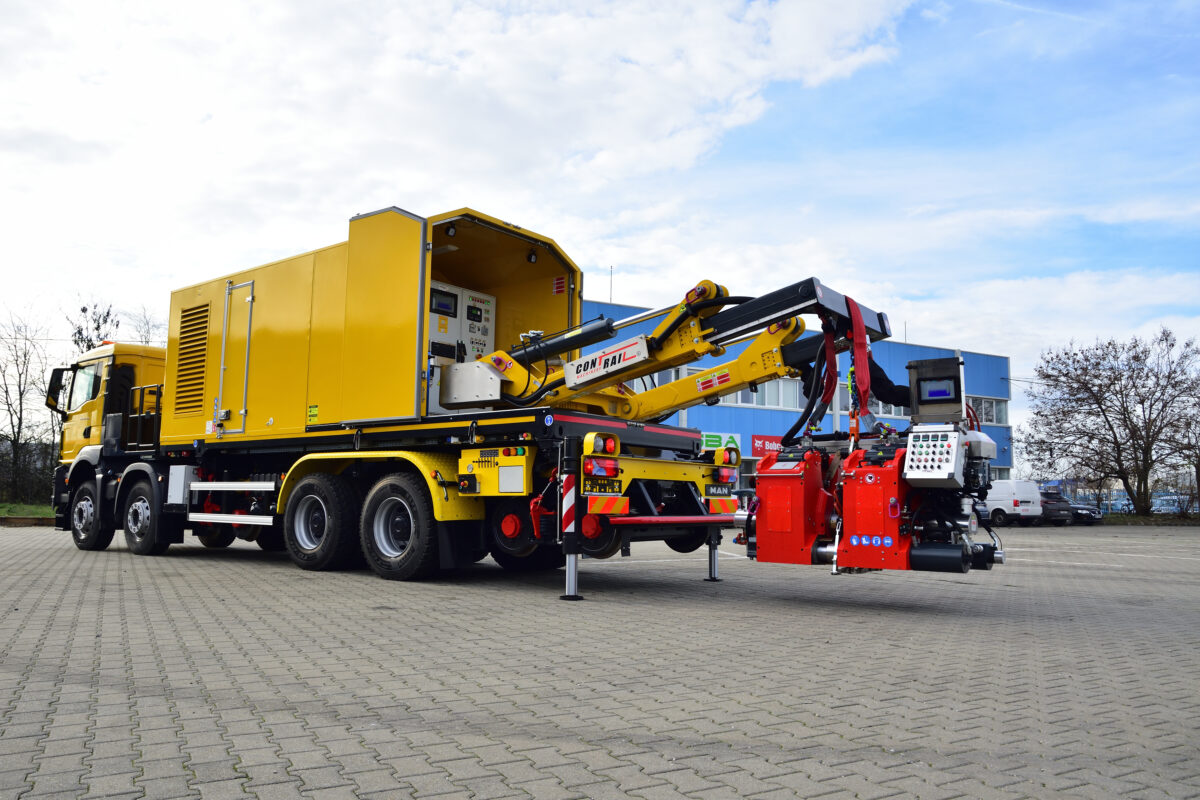
The evolution of railroad rail welding technology represents one of the most critical advancements in modern railway infrastructure development. As global railway networks continue to expand and evolve to meet increasing demands for speed, safety, and efficiency, the methods used to join rail segments have become increasingly sophisticated.
Rail joints are among the most stress-critical elements in any track system. The method used to weld them directly affects structural integrity, maintenance cycles, and long-term infrastructure costs. Two technologies dominate the field: thermite (aluminothermic) welding, long established and widely used, and flash butt welding, which has become the standard for high-performance rail applications.
Thermite Welding: Process Overview
Thermite welding has been used in rail infrastructure since the late 19th century. The process relies on an exothermic chemical reaction between aluminum powder and iron oxide to generate temperatures exceeding 2,400°C. The molten steel produced is poured into a refractory mold clamped around the rail gap, forming a cast joint.
The process is self-contained and requires no external power source, which makes it practical in remote or access-limited locations. A typical joint takes 30-45 minutes from preparation to finishing.
However, thermite welding has inherent structural limitations. The resulting joint is cast rather than forged, which means it can contain porosity, inclusions, and a coarser grain structure compared to the parent rail. The heat-affected zone (HAZ) extends 145-185 mm on each side of the weld, creating a significant region of reduced hardness. Tensile strength typically falls in the 700-800 MPa range, below the 850–950 MPa of standard high-grade rail steel.
Flash Butt Welding: Process Overview
Flash butt welding uses electrical resistance heating combined with mechanical forging. The rail ends are held in hydraulic clamps and brought into proximity; high current is passed through them, burning off surface contaminants and progressively heating the material. At the correct temperature, the ends are forged together under controlled pressure.
The entire weld cycle on a mobile machine takes 2.5-4 minutes. The process is controlled by programmable logic systems that monitor and adjust hundreds of parameters in real time, producing a consistent, fully documented result.
Metallurgical Performance
The forged nature of flash butt welds produces a grain structure closely matching the parent rail material. There is no porosity or inclusion risk, and hardness remains uniform across the joint. The HAZ is typically significantly, 40-60 mm, which preserves rail hardness and reduces the wear irregularities that develop in wider heat-affected zones.
Tensile strength equals or exceeds the parent rail: 850-950 MPa. Fatigue testing shows flash butt welds can withstand load factors up to five times greater than comparable thermite welds before showing fatigue damage.
Productivity
The productivity difference between the two methods is substantial:
- Thermite welding: 12-16 welds per 8-hour shift
- Mobile flash butt welding: 64-80 welds per shift
- Stationary flash butt welding plant: 96-120 welds per shift
The automated cycle also eliminates the variability introduced by manual preparation, chemical mixing, and environmental conditions. Flash butt welding machines operate consistently regardless of weather, while thermite welding can be significantly affected by wind, rain, or temperature extremes.
Quality Control
Thermite welding quality depends heavily on operator skill. Variables such as preheating temperature, mold placement, reaction timing, and ambient conditions all influence the final result. Even experienced operators face inherent process variability.
Flash butt welding systems record every welding parameter for every joint, current, force, displacement, temperature, timing, providing complete traceability. Pre-programmed welding schedules ensure consistent results, and deviations trigger automatic correction or rejection before the weld is completed.
Life-Cycle Economics
Despite a higher initial equipment investment, flash butt welding reduces long-term maintenance costs. The narrower HAZ limits the development of corrugation and track geometry defects that require grinding. Thermite welds typically need replacement or repair at 50–75% of the service life of equivalent flash butt welds.
Reduced inspection frequency, fewer emergency repairs, and lower grinding requirements all contribute to a lower total cost of ownership over the infrastructure lifecycle.
Environmental Considerations
Thermite welding generates significant quantities of slag and aluminum oxide waste, along with fumes from the chemical reaction. Flash butt welding produces minimal waste. Expelled material during the flashing phase is limited to small amounts of metal vapor, and it operates on electrical power, which can be sourced from renewable energy.
Flash butt welding offers measurable advantages over thermite welding across the metrics that matter most in modern railway infrastructure: joint strength, fatigue resistance, production output, quality consistency, and long-term maintenance cost. Thermite welding continues to serve a role where field conditions make powered equipment impractical, but for high-volume or performance-critical applications, the technical case for flash butt welding is clear.
As rail networks face increasing demands for speed, load capacity, and reduced maintenance intervals, the structural and economic advantages of flash butt welding make it the standard of choice for infrastructure built to last.
For more details about other important events in the field, keep an eye on the Contrail blog!
For more information about our services, products, and the latest updates from Contrail, feel free to follow us on our social media platforms. Stay connected with us on Facebook, LinkedIn, and YouTube.
Contact us today to learn how Contrail can support your next railway construction project with high-quality, reliable machinery and solutions!
About The Author
